Finding
Seven good years
Everybody agrees the superhero film collapsed, and the raw numbers agree with everybody. They are also useless: they measure how long a film has been out. Against films its own size, the genre gave back an advantage it only ever held for seven years — and spent the rest of its life, including right now, slightly behind.
The number everyone quotes
The average superhero film drew 10,203 votes in 2018 and 3,062 in 2024. A seventy percent fall in six years. That is the collapse, and it is real arithmetic.
It is also close to meaningless. A 2018 film has had eight years to accumulate votes and a 2024 film has had two. Every film in the catalogue shows this decline, because it is not a decline — it is the age of the release. Any argument built on raw counts is measuring the calendar.
The fix is to compare a film only with other films released the same year. Whatever the passage of time does to one, it does to all of them, and dividing cancels it.
Against its own year
Done that way, the superhero film still looks like it fell: it drew 4.34 times the attention of the average 2018 release and 1.86 times the average 2024 one. Halved.
But the average release is not the comparison anybody means. Nobody is surprised that a tentpole outdraws a mid-budget drama. The question people are actually asking is whether superhero films still command a room that contains other enormous films — so the baseline has to be other enormous films.
The same films, measured twice. The dashed line is parity with the baseline.
That second bar is the whole article. Superhero films spent 2005 to 2012 pulling less weight than other films their size — 0.71, which is to say twenty-nine percent behind. Between 2013 and 2019 they drew exactly level: 1.00. Since 2020 they sit at 0.87.
So the genre has given back about half of what it gained, and it is still ahead of where it started. What has changed far more is the company it keeps: the average film budgeted over a hundred million dollars drew 9,151 votes in the middle period and 5,216 in the last one. Big films lost forty-three percent of their reach. Superhero films lost thirteen percent relative to them.
The event being described as a collapse is mostly a general one, and the superhero film’s own part in it is that it stopped being exceptional. Which is a real thing to have stopped being — but the exceptional period was seven years long, and it was the anomaly, not the baseline.
Supply never moved
The other half of the folklore is that they stopped making them. They did not. Superhero films were 5.4% of well-known releases in 2005, 4.9% in 2018, 6.0% in 2023 and 4.6% in 2024 — a band so flat it is hard to draw. The peak years put out seventeen, sixteen and seventeen titles; the recent ones put out twelve and eight.
Ratings held too. The genre averaged 7.41 in its best year and 6.87 in 2023, against 6.11 in 2005. Whatever happened, audiences did not turn on the films they did watch.
What changed inside them
Same measurement idea, different question. Take only the live-action films, score each of the twenty readings against the action and adventure films of its own year, and compare the first period with the last.
Live-action only, against the action and adventure films of the same year.
They got faster and prettier. Energy moves from a fifth of a standard deviation below its genre to a quarter above — the largest shift of the twenty. Beauty does almost as much. Connection and violence both rise by about a quarter, which is a stranger pair than it sounds: more people bound to each other, and more harm done.
Paranoia is the one that falls, and it falls hard — from a quarter of a deviation below its genre to half a deviation below. These are films with conspiracies in them and almost no dread about them.
The control that killed the better story
Run the same thing without separating animation and you get a much more quotable finding: darkness down, existential weight down, spirituality down, melancholy down. The superhero film got lighter. Sold.
It is an artefact. Animated superhero films are warmer and prettier than live-action ones and there are proportionally more of them now, so they drag the average toward comfort and it reads as the genre softening. Hold the two apart and darkness goes from 0.22 below its genre to 0.23 below, tension from 0.28 below to 0.30 below, and existential weight does not move at all. The live-action superhero film is exactly as heavy as it was.
This is the same failure mode as mistaking a genre for a director: the interesting pattern was a change in what the category contains, not a change in the things inside it.
Are they all becoming the same film?
Worth checking, since everyone says so. The average distance between two live-action superhero films on the twenty readings has fallen from 4.63 to 4.12 — eleven percent closer together.
Except action films generally went from 5.35 to 4.90 over the same span, which is eight and a half percent. Almost all of the convergence is something happening to spectacle cinema as a whole, and that is its own story. Relative to its own neighbourhood the superhero film has tightened barely at all: it sat 14% closer together than action films in 2005 and sits 16% closer now. They were always more alike than the films around them. They have not become dramatically more so.
What this is not
Votes are attention, not money. A film can draw a large audience and lose a fortune, and several of the ones in the last period did. Nothing here says anything about profit.
The animated wing looks like the healthiest part of the genre — averaging 7.46 since 2020 against 6.71 for live-action, a gap that has widened in each period. Treat that carefully. The typical animated superhero film is rated by about a quarter as many people as a live-action one, and small self-selected audiences rate generously. Hold the audience size level and only three animated titles from the last period qualify at all, which is not enough to call. The gap is suggestive and it is not yet evidence.
And the genre here is defined by what a film is about — costumed vigilantes, powered protagonists, the animated and imported wings included — not by which studio made it. Films adapted from comics that contain no superheroes are out. Draw the line differently and the numbers move; the shape of the second bar does not.
The genre since 2019, best rated first
86 of the 310 in the catalogue. Live, so it moves as the catalogue does.
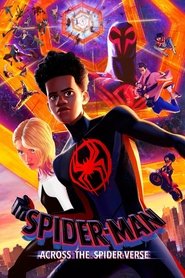 Spider-Man: Across the Spider-Verse2023 · 8.3 · animated
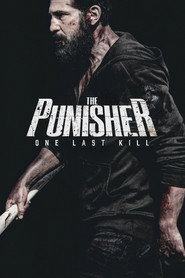 The Punisher: One Last Kill2026 · 8.3
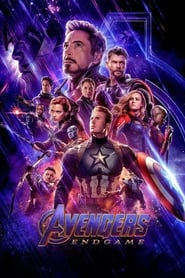 Avengers: Endgame2019 · 8.2
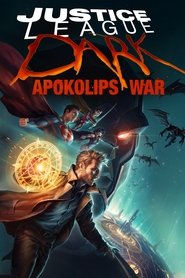 Justice League Dark: Apokolips War2020 · 8.2 · animated
 Zack Snyder's Justice League2021 · 8.1
 My Hero Academia: Heroes Rising2019 · 8.1 · animated
 Miraculous World: New York, United HeroeZ2020 · 8.1 · animated
 Spider-Man: No Way Home2021 · 7.9
 Guardians of the Galaxy Vol. 32023 · 7.9
 Dragon Ball Super: Super Hero2022 · 7.9 · animated
 Spider-Man: Brand New Day2026 · 7.9
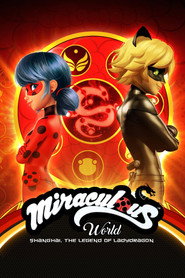 Miraculous World: Shanghai - The Legend of Ladydragon2021 · 7.9 · animated
 One Piece: Stampede2019 · 7.8 · animated
 The Batman2022 · 7.7
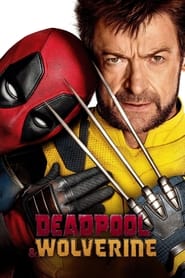 Deadpool & Wolverine2024 · 7.6
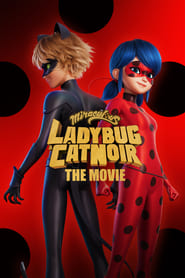 Miraculous: Ladybug & Cat Noir, The Movie2023 · 7.6 · animated
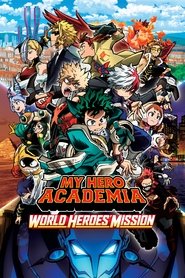 My Hero Academia: World Heroes' Mission2021 · 7.6 · animated
 Shang-Chi and the Legend of the Ten Rings2021 · 7.5