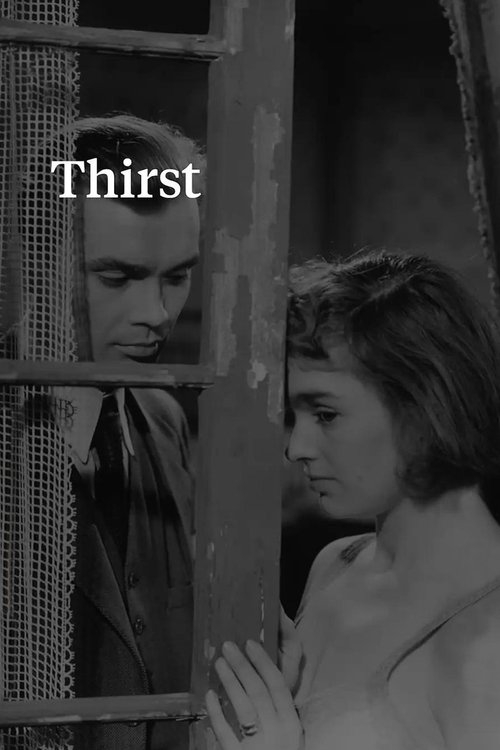
Thirst
Directed by Ingmar Bergman
Produced by SF Studios
A fragmented, melancholic exploration of desire, failed intimacy, and emotional paralysis set against postwar displacement, told through layered memories and fractured perspectives.
A fractured portrait of desire and isolation, following a failing marriage and parallel stories of emotional entrapment as memories surface during a train journey through postwar Europe. Told through flashbacks and multiple narrative threads, the film signals Ingmar Bergman’s emerging mature style.
Clusters
Genres
Questions people ask
Is Thirst sad? Yes, very. More sad than 99% of films.
Does Thirst end with hope? No. Less hopeful than 95% of films.
Is Thirst violent? Not especially. Less violent than 64% of films.
Is Thirst scary? Somewhat. More frightening than 61% of films.
Is Thirst easy watching? Not especially. Less comforting than 61% of films.
These describe how the film comes across, measured across the whole film and compared with other well-known films. They are not a content list — nothing here was counted or checked scene by scene, so for age-suitability or specific content use a classification board or a dedicated content-warning service.
Written about
Cinnamon Score
How much this film gives you that nothing else will, and whether it delivers.
You have seen this shape before.
How unlike any other film this one feels
How much more it delivers than it promises
How much audiences actually like it
Ensemble










Like Thirst
Nearest across the full emotional profile.






Same Mood as Thirst
Nearest on what's most distinctive about this one.

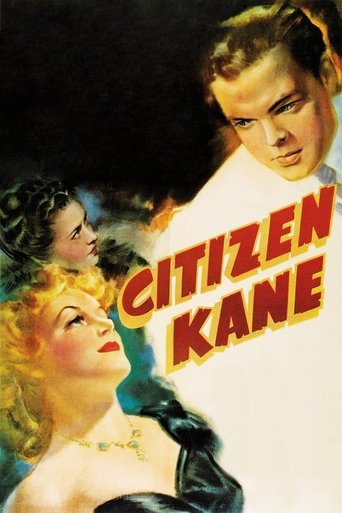

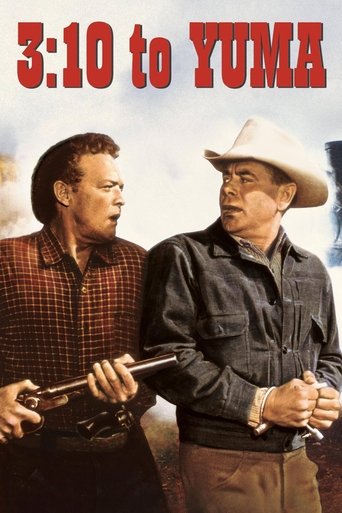

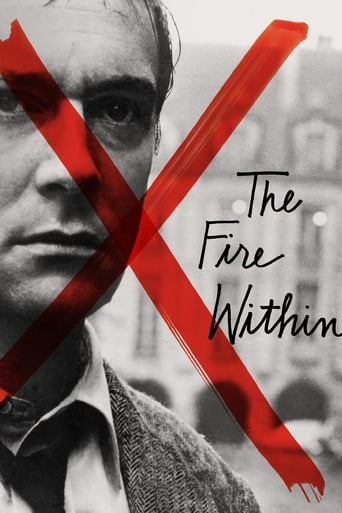
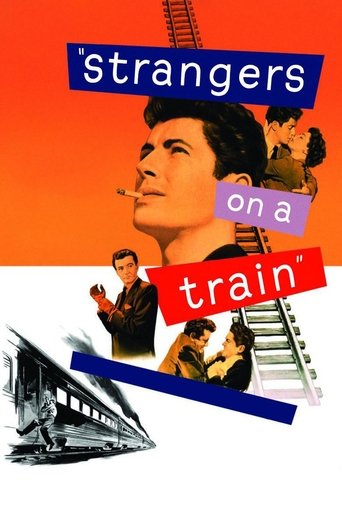

Like Thirst, But Darker
Similar, pushed toward heavier and more intense.







Like Thirst, But Lighter
Similar, pushed toward warmer and easier.










Like Thirst, But Less Popular
Same territory, far fewer people have seen it.