Finding
Whose show is it?
Television has an authorship question film does not, because television has a channel. Is it a Gilligan show or an AMC show? Both are real, and they are not close: two series by the same showrunner on different networks are several times more alike than two series on the same network by different showrunners — between two and six times, depending on how you average, and never once the other way round.
The question film cannot ask
The film version of this had three candidates — director, star, studio — and the director won with the studio barely registering. Television adds one the cinema does not really have: a channel with a commissioning philosophy, which measurably exists. HBO is a real thing and so is CBS. The question that piece could not answer is whether the channel is the author or merely the address.
So: take two series, measure how far apart they sit across the twenty readings, and compare pairs that share a showrunner against pairs that share a network. Every reading is already a z-score against series of the same primary genre and the same decade, so neither side gets credit for commissioning similar genres.
The exclusion that decides it
Done naively this is worthless, because “two shows by the same creator” quietly includes spin-offs, reboots, continuations and series that simply changed channel. Those are not evidence of a sensibility. They are the same show.
Every pair is therefore dropped — from all three groups and from the baseline — if the two series share any top-billed cast member, or the first significant word of their titles. It costs a fifth of the same-creator pairs and it matters: the pairs it removes sit at 3.75 apart against 4.51 for the work that survives. The effect was real and it was also inflated.
The answer
How much closer than unrelated series each kind of pair sits. Unrelated pairs average 5.89 apart on the twenty readings.
Sharing a network buys 0.24. Sharing a showrunner buys 1.38. Both are far outside the noise — the showrunner figure is about thirty standard errors from zero on 1,607 pairs — but the ratio between them is not one number, and it is worth saying so. Weight every pair equally, as above, and the person is worth five to six times the channel. Weight every showrunner and every network once each, so a channel with three hundred series does not outvote one with three, and it falls to about twice. Raising the vote floor from 100 to 1,000 moves it again. Across all of that the answer sits between two and six times, and the ordering never reverses.
They also compound. A pair sharing both sits 1.70 closer than chance, slightly more than the two effects added together, which is what you would expect if showrunners tend to end up at channels that suit them.
One more check, because a handful of prolific creators contribute an enormous number of pairs. Give every showrunner equal weight instead of every pair, and the creator effect gets stronger, not weaker: 4.21 against 4.51. It is not being carried by the people with ten credits.
What it looks like
The clearest case in here is Aaron Sorkin. The West Wing ran on NBC, a broadcast network; The Newsroom ran on HBO, twelve years later, in an era of television that supposedly changed everything. On the twenty readings they sit 2.37 apart, against a chance distance of 5.89. Two different channels, two different decades, two different business models, one sensibility that the measurement cannot see past.
The closest pairs, one per showrunner — different networks, no shared cast, no shared title word. 111 showrunners, 290 qualifying pairs.


Joss Whedon · 1.72 apart


Lauren Iungerich · 1.85 apart


Jonathan Entwistle · 1.90 apart


Bruno Heller · 1.96 apart


Peter M. Lenkov · 1.98 apart


David E. Kelley · 2.01 apart


Greg Berlanti · 2.05 apart


Gustavo Bolívar · 2.06 apart
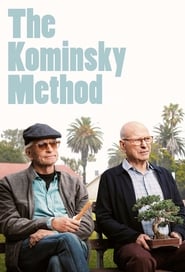

Chuck Lorre · 2.07 apart


Taylor Sheridan · 2.10 apart