Finding
The strangest films ever made
Every film here carries twenty emotional readings, and each one is measured against the whole catalogue, so an ordinary film sits near the middle of all twenty at once. The average distance from that middle is 4.41. A handful of films sit past 7.5 — and the far edge turns out not to be the dark end of cinema. It has two ends, and they are the same distance out.
What strange means here
Not an unusual plot, and not an unusual production history. Nothing in these readings knows that a film was shot backwards or financed by a cult. What they know is how a film comes across on twenty axes — how dark, how playful, how tense, how tender, how beautiful, how ambiguous — and each of those is expressed as a distance from the catalogue average, so an utterly typical film reads as zero on all twenty.
Put all twenty together and every film has a position, and the distance from the middle is a single number: how far this film is from the ordinary film, counting every axis at once. It is deliberately not corrected for genre. The director piece and the network piece both hold genre still, because there the question was whether a person or a channel adds anything beyond their shopping list. Here the question is the opposite one. A film that is extreme because it is a horror film is still extreme.
How empty it is out there
Every well-known film by its distance from the centre. Highlighted: everything past 7.
Cinema is much more bunched than its reputation suggests. Nearly three quarters of everything sits between 3.5 and 5.5, which is to say that most films are a familiar arrangement of familiar feelings. Sixty-six films in fourteen thousand get past 7. One gets past 8.5.
That is worth holding onto before reading the list. These are not films that are somewhat unusual. They are the outer half of one percent of everything that has been widely seen.
The far edge
Distance from the centre of the catalogue. Read live, so this is the current answer rather than the one that was true when the piece was written.
 Begotten1991 · 8.56
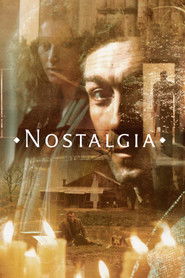 Nostalgia1983 · 8.29
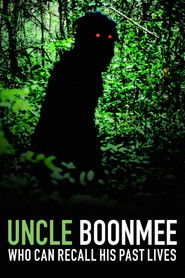 Uncle Boonmee Who Can Recall His Past Lives2010 · 8.25
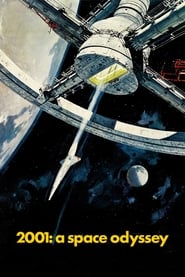 2001: A Space Odyssey1968 · 7.97
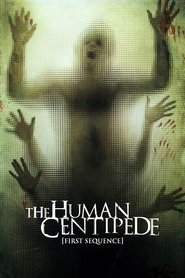 The Human Centipede (First Sequence)2009 · 7.90
 mother!2017 · 7.86
 Salò, or the 120 Days of Sodom1976 · 7.85
 The Human Centipede 2 (Full Sequence)2011 · 7.83
 The Tree of Life2011 · 7.81
 Winter Light1963 · 7.74
 Hagazussa2018 · 7.64
 Pi1998 · 7.63
 El Topo1970 · 7.59
 Babette's Feast1987 · 7.57
 The Sacrifice1986 · 7.55
 Angel's Egg1985 · 7.54
 Iron Lung2026 · 7.51
 Mirror1975 · 7.51
 My Dinner with Andre1981 · 7.50
 Valhalla Rising2009 · 7.50
 The Fountain2006 · 7.49
 The Seventh Seal1957 · 7.45
 Won't You Be My Neighbor?2018 · 7.43
 Meet Me in St. Louis1944 · 7.42
Strange is not dark
The obvious reading of that list is transgression, and it is wrong. The extreme horror is there, and so is the slow transcendental cinema, and so — at the same distance from ordinary as the worst thing on the list — is a film about a woman cooking one perfect dinner, and a documentary about a children’s television presenter being kind.
This is what happens when you measure distance in every direction rather than along a single axis. Unbroken gentleness is as far from the ordinary film as unbroken cruelty is, because the ordinary film is a mixture and these are not. The far edge of cinema is a sphere, not a basement.
And strange is not alone
The natural next thought is that these films must also be the ones nothing else resembles. They are not, and the number is startling: the correlation between how far a film sits from the middle and how far it sits from its own nearest neighbour is 0.054. Effectively nothing.
The extremes are crowded. Films that push hard in one direction push in the same few directions as each other, so most of this list has close company out at the edge. Being unlike everything else is a different achievement, and a rarer one, which is the subject of its own piece.